


At the “Ask CIO, CEO Anything About AI” discussion session of the CIO Summit 2026, Mr. Dao Ngoc Dung, Director of Information Technology at SHB, shared SHB’s approach as a business applying AI: focusing on business problems, mastering the platform, while also placing emphasis on people and processes.
The CIO Summit 2026, held on October 1st in Ho Chi Minh City with the theme “Human-Led, AI-First: From Pilots to P&L,” brought together over 500 technology and business leaders. The central question shifted from “What can AI do?” to how AI can create real value in business operations.
In a discussion session featuring speakers from banks and technology companies such as VietinBank, VNG, SHB, Sacombank, and ECQ, two approaches were discussed: bottom-up, where businesses create an environment for employees to proactively apply AI to their work; and top-down, where AI is deployed within the overall transformation strategy of the organization.
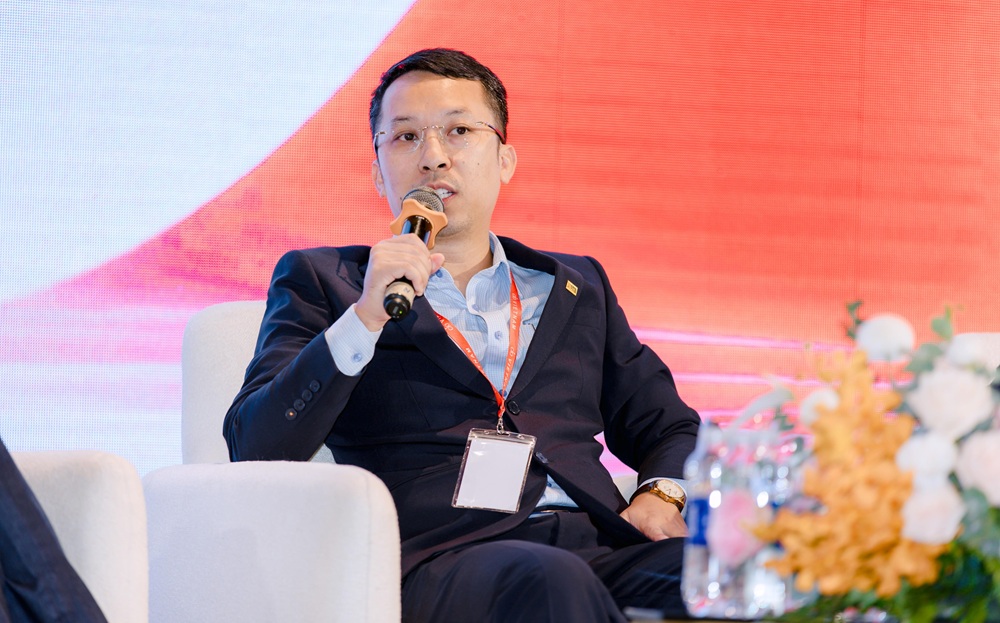
Mr. Dao Ngoc Dung stated that SHB’s overarching principle in applying AI is “preparation first, implementation later.”
SHB chose the second approach. The application of AI at SHB is clearly defined by the Board of Directors, linked to the 5 FIRST technology transformation strategy: Data & AI First, People First, Cloud First, Security First, and Mobile First, while simultaneously aligning with the business model transformation. Based on this, the bank is building a technological, data, safety, and security platform, gradually expanding AI application capabilities to its business units.
“We are an AI application company.”
According to Mr. Dao Ngoc Dung, Director of Information Technology at SHB, one of the first issues every business needs to determine is choosing between developing AI and focusing on AI applications. SHB clearly defines its role as a bank that applies AI to its business and operations, rather than competing in developing AI platform models.
“Current core AI models are mature enough and increasingly accessible. A bank’s advantage doesn’t lie in creating its own model, but in knowing how to choose the right model for the right problem, having good data, and integrating AI into daily processes,” Mr. Dung shared.
Following this approach, SHB applies the 10-20-70 principle in allocating effort: approximately 10% for models and algorithms, 20% for data and technology platforms, and 70% for people, process redesign, and change management. For businesses developing AI products, the proportion allocated to models may be higher. For banks, the effectiveness of implementation largely depends on the ability of the team to change their working methods and integrate AI into processes effectively.
7 steps to integrate AI into your business.
From traditional AI to generative AI and agent AI, SHB is gradually integrating artificial intelligence into real-world operational problems following a 7-step roadmap:
According to the Head of Information Technology at SHB, the overarching principle is “standardize first, then transition”: standardize data, people, processes, and platforms before transitioning and scaling up. SHB started with internal (Inside-Out) problems, focusing on three groups: information technology (IT); retail banking – payments; and risk management – fraud prevention. Based on this, the scope of application expanded from back-office operations to front-office activities directly serving customers.
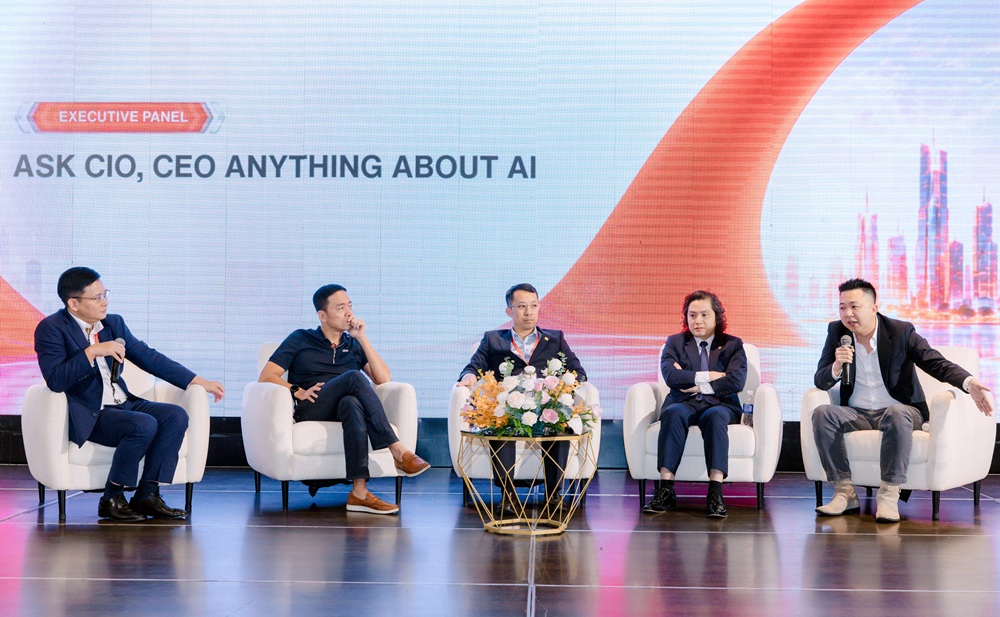
SHB’s Head of Information Technology, Dao Ngoc Dung (center), and speakers at the discussion session “Ask CIO, CEO Anything About AI”.
Model Hub: Choosing the right “brain” for each problem
To effectively and safely apply AI across the entire bank, SHB has built a Model Hub. This platform helps the bank select the appropriate AI model for each problem based on criteria such as accuracy, cost, response speed, and data sensitivity.
Through Model Hub, SHB can flexibly combine various types of models: world-leading models, open-source models, Small Language Models (SLM), and Domain-Specific Models. Small Language and Domain-Specific models can be run directly on the bank’s infrastructure. In the future, the bank may also utilize models developed by Vietnamese technology companies.
“There is no single best model for every problem. Complex analyses require robust models, while repetitive tasks with sensitive data can utilize smaller models running on the bank’s infrastructure . This approach optimizes costs, reduces reliance on a single vendor, and increases data control ,” Mr. Dung said.
In addition, SHB has built a bank-wide Enterprise Knowledge Base, digitizing and systematizing regulations, processes, products, and operational experience. On this platform, the bank develops “Digital Expert Agents” in each area such as credit, payments, IT operations, and compliance. Each digital expert is developed with the participation of the bank’s Subject Matter Experts.
The roadmap evolves from knowledge-based question-answering assistants to agent AI capable of executing tasks according to approved scenarios, with authorization and tracking mechanisms. When data, technology, processes, and people are standardized on a common platform, these capabilities can be scaled across the bank without rebuilding from scratch.
AI originated within the Information Technology sector
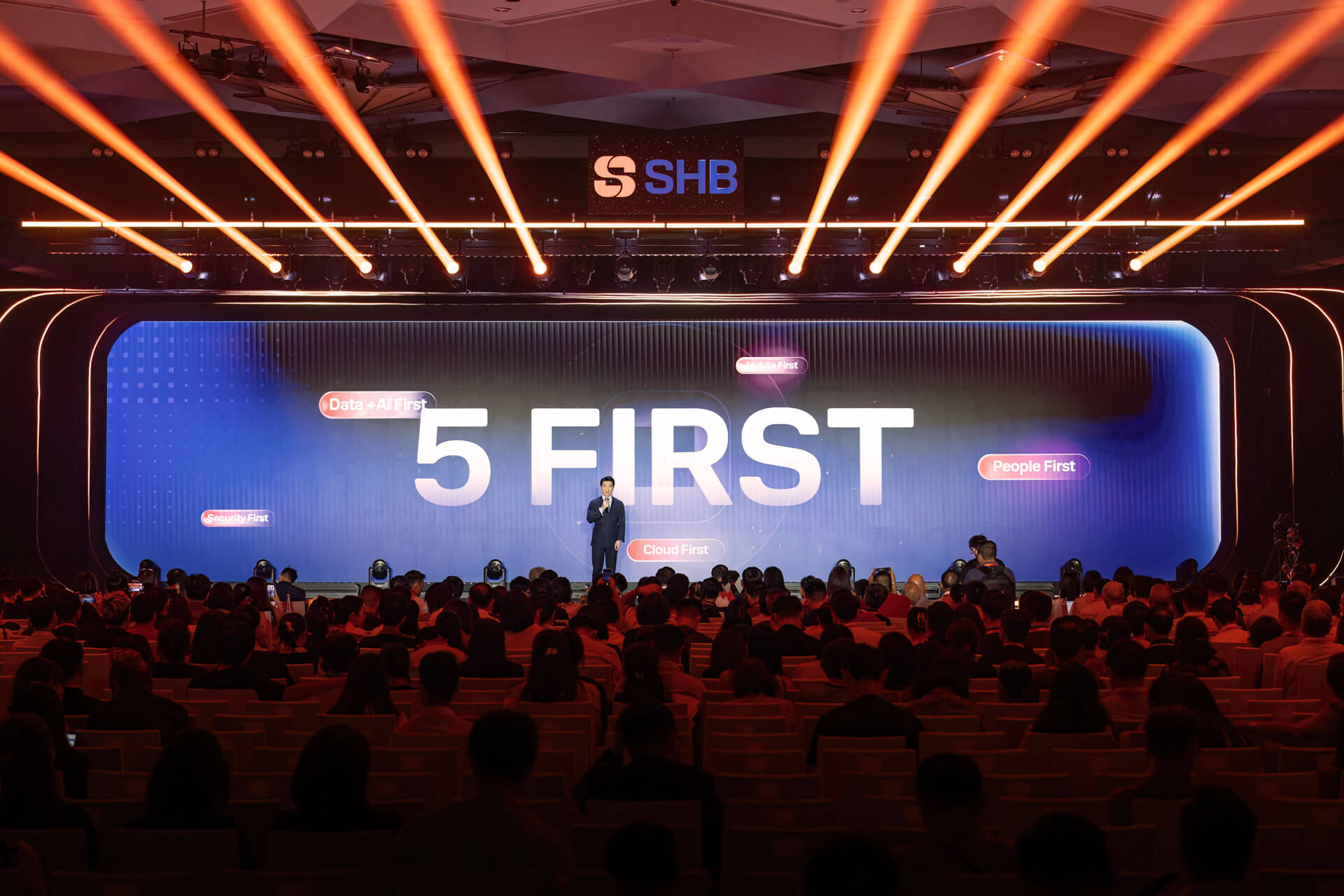
The application of AI at SHB is clearly guided by the Board of Directors, and is linked to the 5 FIRST technology transformation strategy.
According to SHB’s approach, the Information Technology Division is one of the leading units in applying AI, thereby verifying its effectiveness before expanding it throughout the bank. The example shared by Mr. Dung at the CIO Summit stems from the Division’s daily operations: operating the banking system continuously 24/7, while simultaneously developing digital products to support business activities.
The bank’s technology system operates continuously and requires a high level of monitoring. Over the past year, SHB has focused on building a centralized monitoring platform (Observability), aggregating data on activity logs, operational indicators, and the journey of each transaction on a common platform.
Previously, when an incident occurred, engineers had to check multiple screens and each system individually. With a centralized monitoring platform, the team has a more comprehensive view of the system’s operational status, thereby supporting early identification of anomalies, instead of only discovering them after customers have been affected.
In addition, the bank standardized its incident handling process. The operational experience of the engineering team was systematized into handling scenarios, while repetitive tasks were automated. Based on this data and scenarios, AI was applied to detect anomalies, suggest causes, and propose solutions.
This is the first step in the development of an AI-based intelligent operations model (AIOps). The system is gradually improving its ability to observe, detect, and handle familiar situations on its own, while humans retain decision-making power at critical stages.
“Our approach is to standardize the technology system, readjust people, technology, and processes to build pre-defined incident response scenarios, aiming for operational automation,” Mr. Dung shared.
One key aspect of SHB’s approach is that monitoring capabilities are considered right from the system design stage, rather than being added only after the system is operational. The bank aims for the “design for no-ops” principle, where self-monitoring, self-alertation, and self-processing capabilities are integrated from the software design phase.
This approach also extends the application of AI to the software development process. SHB is gradually shifting from a traditional development process, which relies heavily on human resources at each stage, to a development lifecycle supported by AI. In this process, AI assists programmers in writing and reviewing source code, automating testing, and shortening the time to product deployment.
Accordingly, development and operations are more closely linked in a continuous lifecycle with the ongoing involvement of AI.
“If cars can drive themselves, there’s no reason why software can’t do it, of course within the limits of human control,” said the Head of IT at SHB.
The goal of this approach is not to replace humans, but to reallocate resources more efficiently.
“Programmers and operations engineers are not being replaced, but rather ‘upgraded.’ They spend less time on repetitive tasks and focus more on in-depth understanding of business processes and models, designing solutions, and ensuring product quality and safety,” Mr. Dung said.
Humans are at the center of AI transformation
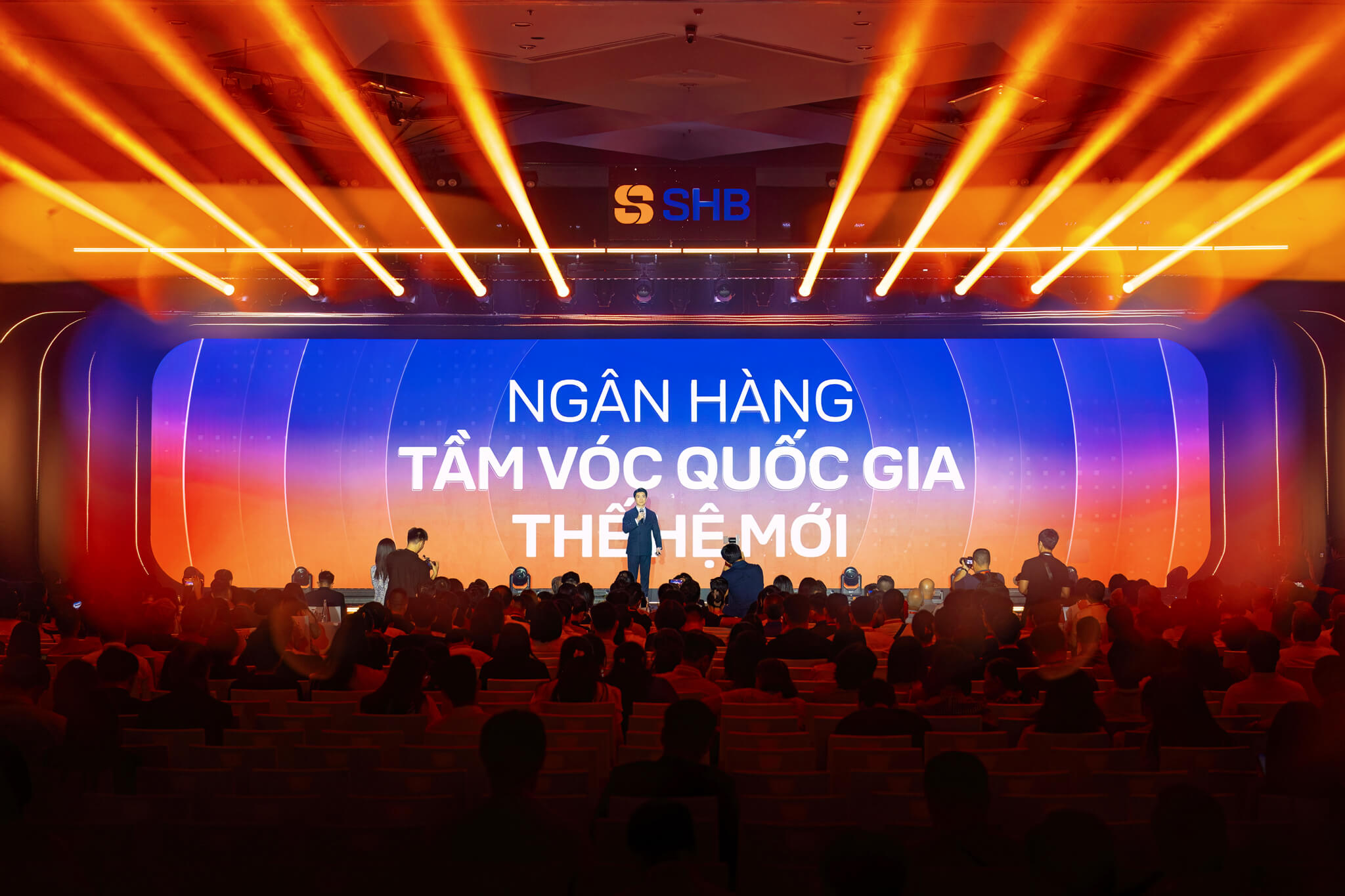
Technology is one of the pillars in SHB’s journey to becoming a “New Generation National-Level Bank”.
To realize the 70% allocation to people and processes in the 10-20-70 principle, SHB is shifting its IT division to a Target IT Operating Model, organized by product and platform (Product & Platform Operating Model). According to Mr. Dung, in the age of AI, this is a crucial condition for the technology department to enhance its flexibility and scalability.
In this model, high-performing engineering teams are organized into specialized groups, coordinating with business units and operational departments. Technology and operations no longer function separately but share common goals, agree on priority tasks, and are jointly responsible for the final business results.
Simultaneously, the bank is developing human resources in the fields of technology, data, and AI; and participating in and collaborating with programs such as Hack (CX) Together and the Vietnam AI Innovation Challenge.
On its journey towards positioning itself as a “new generation national-level bank ,” SHB recognizes that AI is not simply a race to create technology, but rather a process of transforming technology into productivity, improving decision-making quality, and enhancing the experience for customers and employees.