

SHB’s Sustainable Finance Framework establishes financing criteria for green and social projects, and has received an independent rating opinion (SPO) from S&P Global Ratings, providing a basis for the Bank to develop financial products in accordance with international practices.
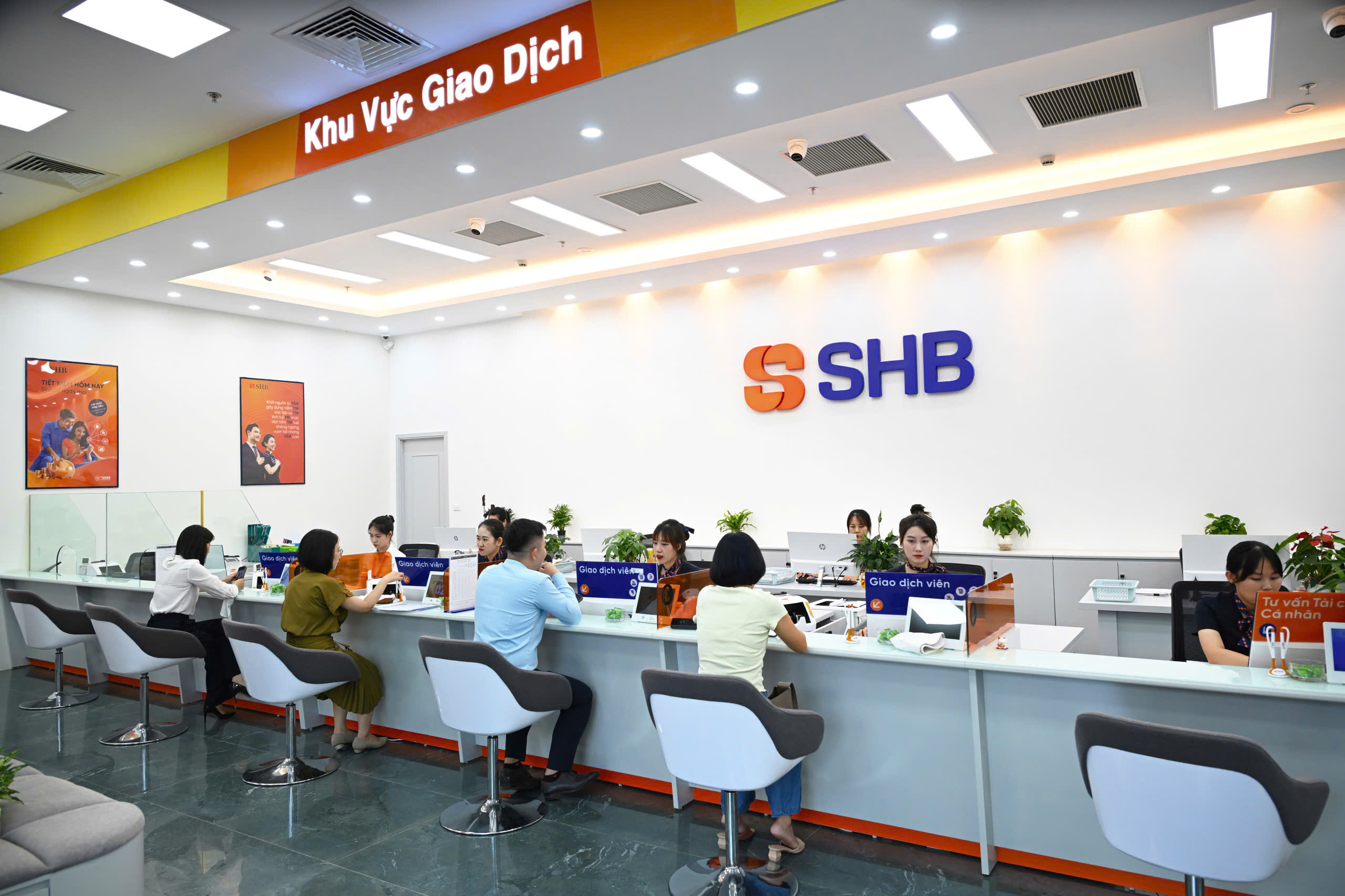 SHB announces its first Sustainable Finance Framework.
Saigon – Hanoi Commercial Joint Stock Bank (SHB) has for the first time announced its Sustainable Finance Framework (SFF), establishing a methodology for identifying, evaluating, and selecting activities and projects eligible for funding based on sustainability criteria.
In early October, S&P Global Ratings published an independent assessment (Second Party Opinion) of the Framework. According to S&P Global Ratings, eligible green and social projects can directly address several key challenges in Vietnam, including rising carbon emissions, water stress, and ocean plastic pollution. On the social side, improving access to education, healthcare, credit, and housing contributes to enhancing living conditions and socio-economic development opportunities for disadvantaged populations.
An SPO is an assessment of the financial framework at a specific point in time, not a credit rating of the bank. This independent assessment provides additional reference points for investors and financial institutions when considering the capital utilization criteria, project selection process, and reporting mechanisms of the issuer.
The Sustainable Finance Framework is linked to the practical needs of the economy.
SHB’s Sustainable Finance Framework identifies eligible financial products and services and standardizes capital management methods for sustainable activities. The scope includes bonds, corporate loans, trade finance, consumer loans, and green, social, or sustainable deposits.
The framework covers three key funding groups: green finance, blue finance, and social finance, connecting resources with the needs of green transformation, natural resource conservation, and improved quality of life.
In the field of green finance, eligible project categories include renewable energy, energy efficiency improvement, green buildings, clean transportation, pollution control, circular economy, and natural resource management. These areas contribute to efficient resource utilization, reduced environmental pressure, and the promotion of sustainable production and business models.
Notably, blue finance is a separate component within the Framework, aimed at protecting marine ecosystems, managing and sustainably utilizing water resources, treating wastewater, developing sustainable fisheries, and engaging in ocean-responsible economic activities.
For the social sector, the Framework identifies funding groups aimed at expanding access to finance, creating jobs, developing health, education, affordable housing, and basic infrastructure. Clearly defining these project groups helps to align the use of capital with the specific needs of the economy and the community.
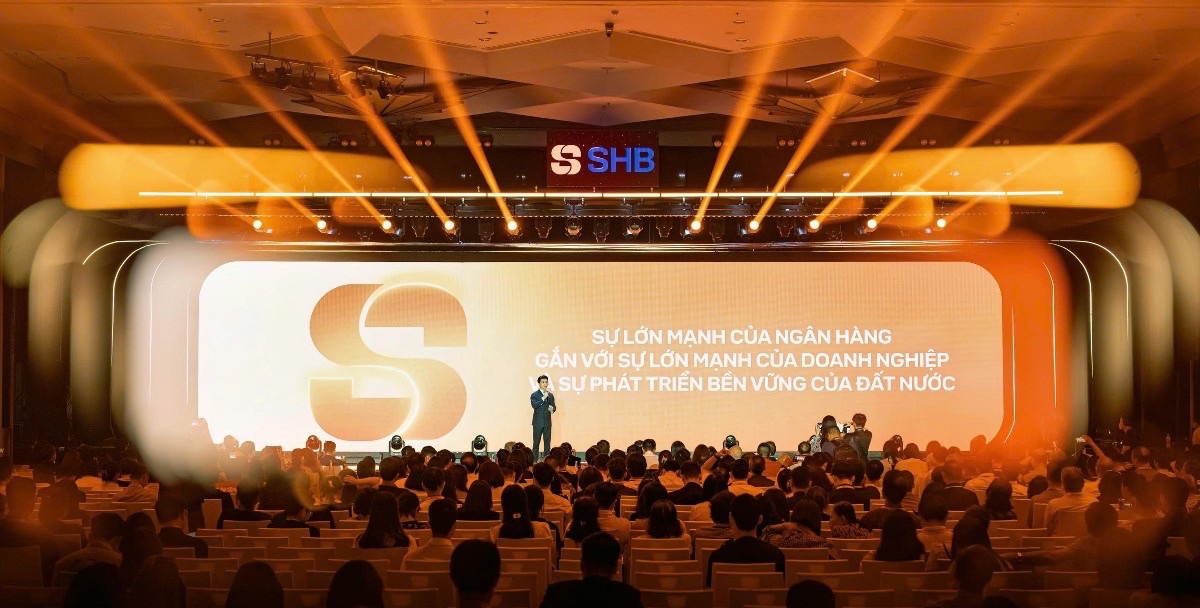 SHB is a pioneer in directing capital to green and sustainable development projects.
In terms of reference, the Framework is built upon the Green Bond Principles, Social Bond Principles and Sustainable Bond Guidelines of the International Capital Markets Association (ICMA); and the Green Lending Principles and Social Lending Principles of the LMA/LSTA/APLMA.
The framework also references the IFC’s Blue Finance Guidance, which covers activities related to marine ecosystems and the sustainable use of ocean resources.
Through these criteria, SHB has a basis for selecting and allocating resources in line with its stated environmental and social goals. This approach focuses on actual financing needs while gradually improving its ability to monitor and assess impacts.
Transparency in capital management and expanding access to international funding sources.
A key aspect of S&P Global Ratings’ assessment is SHB’s mechanism for managing capital and controlling eligible projects. According to the Framework, the Bank establishes processes for project selection, appraisal, and approval; applies environmental and social management systems to identify and monitor risks; and specifies activities excluded from the scope of financing.
SHB is committed to publishing annual capital allocation and impact reports until all allocated funds are disbursed, and will also hire a third party to review the capital allocation reports after issuance. These mechanisms enhance transparency, enabling stakeholders to monitor capital utilization and performance against published criteria.
The independent assessment examines both the project portfolio and the governance, control, and disclosure processes related to sustainable finance. This forms the basis for SHB to further refine its impact measurement methodology, improve the quality of environmental and social data, and enhance accountability during implementation.
Standardizing these contents also provides a foundation for SHB to develop products that serve the investment, technological innovation, and transformation needs of its customers. For international partners, clear financing criteria and reporting mechanisms provide additional information to support the assessment process, exchange, and the development of sustainable financial transactions.
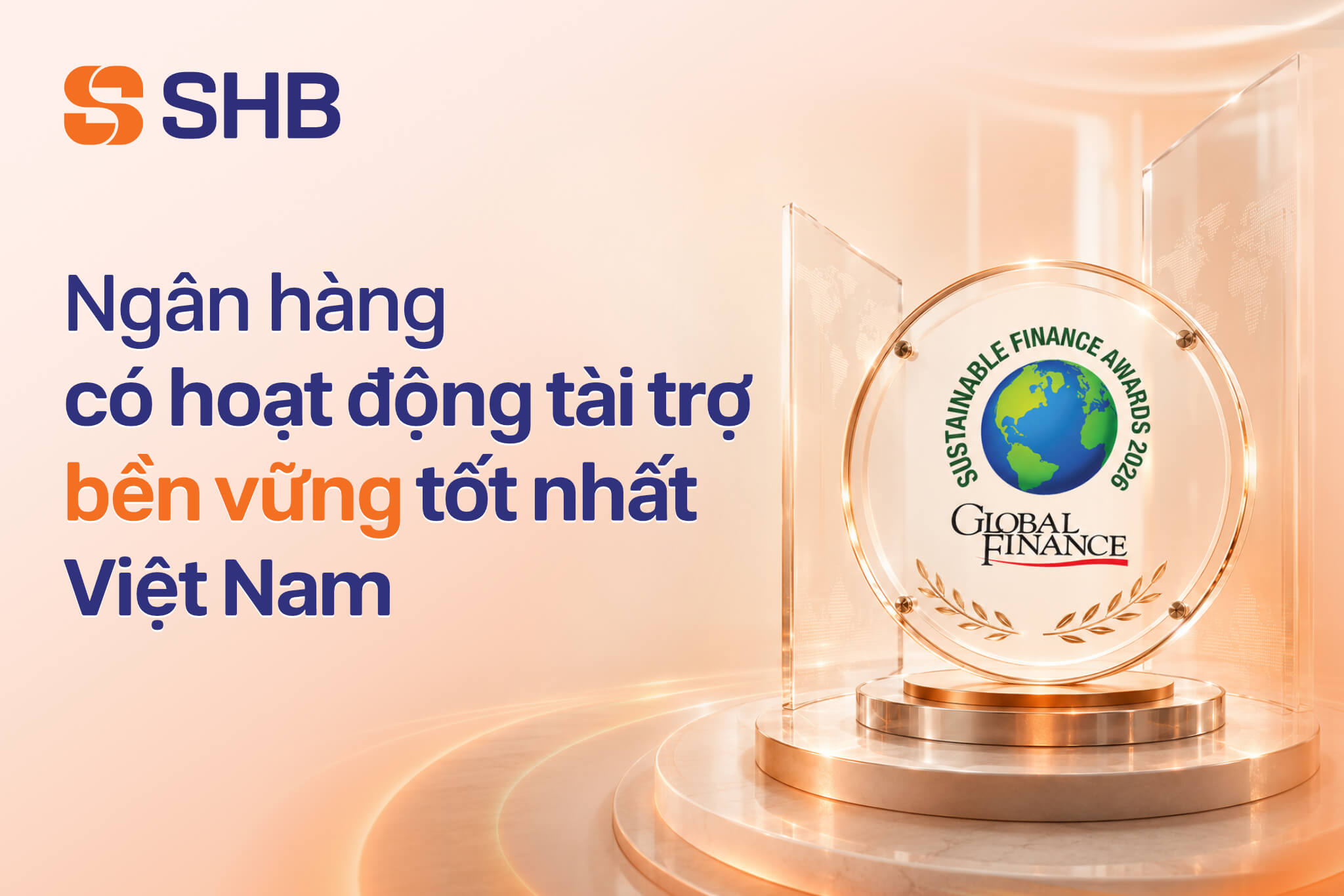 For many consecutive years, SHB has been honored by Global Finance as the “Best Sustainable Financing Bank in Vietnam”.
Recently, the bank announced the signing of a loan agreement coordinated by Sumitomo Mitsui Banking Corporation (SMBC), with an initial size of US$340 million and the possibility of increasing it depending on the terms of the agreement.
Simultaneously, SHB also successfully issued its first international bond issue in Singapore dollars (SGD). The bond issue has been listed and officially traded on the Singapore Stock Exchange.
Prior to the issuance, S&P Global Ratings also announced a long-term issuance credit rating of “AA” for SHB’s planned SGD bonds, guaranteed by the Credit Guarantee and Investment Fund (CGIF), a trust fund of the Asian Development Bank (ADB). This rating is equivalent to CGIF’s long-term foreign currency issuer credit rating, reflecting the fund’s unconditional, timely, and irrevocable guarantee. This is the rating of the guaranteed bond, not SHB’s institutional credit rating.
The SGD bond transaction marks a step forward in SHB’s journey to expand its presence in the regional capital market, demonstrating its ability to build a capital raising structure that meets international requirements. Along with syndicated loans, the transaction helps the Bank diversify its medium- and long-term funding sources and expand its relationships with international financial institutions and investors.
Green credit growth is linked to long-term goals.
According to the Sustainable Finance Framework, SHB aims to increase the proportion of green credit to at least 25% of its total outstanding loans by 2028. In its financing portfolio, SHB has participated in large-scale renewable energy projects, including the Cho Long wind power plant (155 MW), the Hoa Dong 2 wind power plant (72 MW), and the Thien Tan solar power cluster (240 MW). The total investment for these three projects is approximately VND 14,601 billion, of which SHB has financed approximately VND 11,265 billion.
The bank also raised two syndicated USD loans linked to environmental, social, and governance (ESG) criteria, totaling nearly $600 million, with the participation of 26 international financial institutions. This resource contributes to expanding financing options for businesses and projects oriented towards sustainable development.
In the social sector, SHB prioritizes supporting small and medium-sized enterprises (SMEs), including women-owned businesses and businesses involved in supply chains. The bank also collaborates with international institutions to mobilize capital and provide technical support, improving access to credit for its target customer groups.
The publication of the Sustainable Finance Framework, along with the independent assessment by S&P Global Ratings, marks a step towards standardizing how SHB identifies, manages, and reports on sustainable financial activities. Banks now have additional tools to link credit portfolio development with environmental, social, and information transparency requirements, while also preparing to access diverse domestic and international sources of capital.
SHB’s orientation towards enhancing its internal capacity and expanding international cooperation aligns with the spirit of Resolution No. 59-NQ/TW of the Politburo on international integration in the new context. For SHB, this process is demonstrated through adopting international practices, developing partnerships, and connecting capital sources to serve the needs of the economy.
From operational standardization and product development to expanding international capital connections, SHB is gradually concretizing its positioning as a “new generation national-level bank.” Its integration capabilities are linked to its ability to support businesses in their transformation, expand access to finance for the people, and create long-term value for customers, shareholders, and the community.